

Shaghaf by Abed Azrié
Composer Abed Azrié's autobiographical book connects his singular experience to a broader collective history of uprootedness.
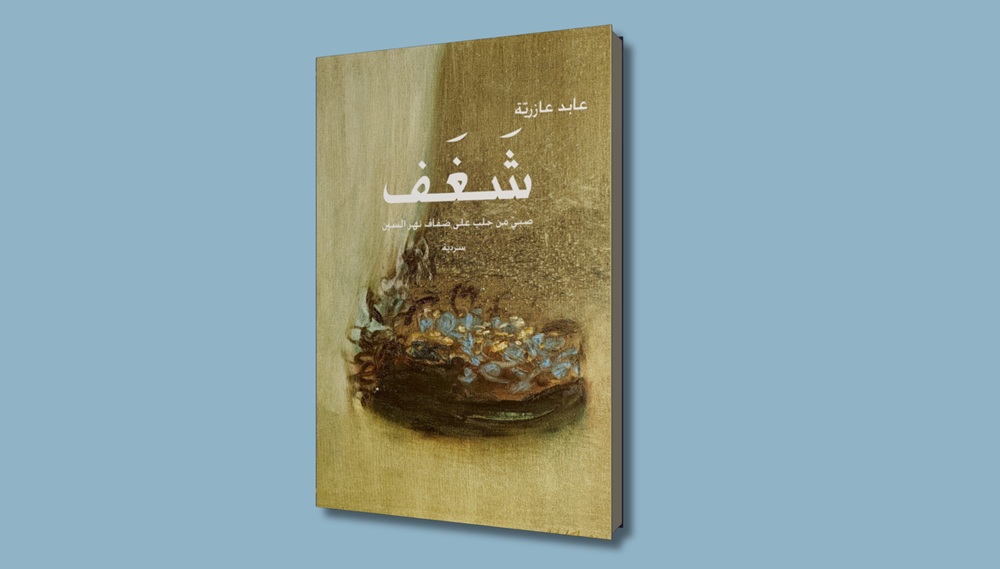
Beginning with a genealogy of calamities, Abed Azrié’s autobiography traces a life that began in adversity and was twice spared catastrophe; saved first by his mother and sisters, then by the arts, which would become a guiding instinct; an inner drive that not only protected him but also redefined his trajectory as a man and as a creative practitioner.
By documenting how his passion for music has shaped his own life and artistic trajectory, Azrié connects his singular experience to a broader collective history of uprootedness, in which geographical displacement becomes inseparable from artistic practice.
Paradoxically perhaps, Azrié unsettles his own musical memory to refine his vision: rather than reproducing inherited musical traditions, passed from generation to generation, hostile to innovation and prone to fossilisation, the composer embraces novelty, hybridity and the fluidity of forms, shaping them as they shape him in turn.
Treating sound as a plastic medium, he works as readily with poems as with ancient myths and their endless variations, deconstructing and reconstructing them to reveal how their inherent malleability gives expression to a universal essence. It makes for a music which is freed from the straitjacket of tradition and from the distorting lens of Orientalism – singular, exploratory, and profoundly alive; a music grounded in the physicality of bodies and instruments, always becoming and always in movement, in an endless search for mystical union.
Abed Azrié autobiographical book has been published in Arabic for the first time in October 2026 - find out more about the book and FAP's involvement in this project on the Publications page
About the author
Abed Azrié is a French composer, born in Aleppo, Syria. He has published some twenty music albums, composed music for films and published several books, including his well-known adaptation of the "Gilgamesh epic" into French. On his tours throughout Europe, the United States and Mexico, he inspires his audiences with the modernity of his compositions and universality of his poetic messages. His music has long enjoyed the admiration of artists as diverse as Yehudi Menuhin, John Adams, Jeff Buckley, Leonard Cohen or René Char.
Abed Azrié sees himself primarily as a man of freedom. He believes in the arts as a medium of humanity and is defending an art that is free from entrenched forms and limitations and is aiming directly at man in his universality and timeliness. For him, « a word which is sung is no longer just a simple word, but it is enchanted, transformed into trance ».
The texts which he selects for his compositions are from oriental and western, ancient and contemporary poetry, and are written in different languages (Arabic, Spanish, French, Venetian, German and English): Adonis, Andrea Zanzotto, Omar Khayyam, Jean Cocteau, Gibran, Hafiz, Goethe, and others... All these texts have one thing in common: they are evoking the fullness of life and they celebrate the miracle of life, the freedom of the mind and the opening of the heart.
Serving these essential texts, Abed Azrié is writing a luminous, profound and refined music, which combines in ever renewed ways instruments, rhythms and voices, creating a universe of sound that only belongs to him. His music expresses an exceptional vitality inhabited by a subtle sense of the sacred without reference.


The Foundation for Art and Psychoanalysis is registered in the UK.
Registered Charity Number 1186928